When to Call for Professional Tree Removal in DeLand, Florida
Tree Work Is Not a DIY Job
Most homeowners in DeLand, Florida, have a chainsaw in the shed. That doesn't mean every overgrown limb or leaning trunk should be a weekend project. Tree work involves weight, height, and unpredictability. A branch that looks stable from the ground can twist and fall in a way you didn't expect. That's why professional tree removal exists, not to take money out of your pocket, but to keep you, your house, and your neighbors safe.
I've been in the tree care business long enough to see what happens when people underestimate a job. A friend of mine once tried to take down a water oak in his backyard. He tied a rope to his truck, revved the chainsaw, and hoped the tree would fall clean. It didn't. The trunk split halfway down, the top swung sideways, and the whole thing landed on his fence and a corner of his shed. What should have been a two-hour job turned into a week of repairs and a much bigger bill. That's the kind of story that reminds me why professional tree removal matters.
The Difference Between a Chainsaw and a Plan
Cutting down a tree is not just about making the right cut. It's about understanding the tree's weight distribution, the condition of the wood, the wind, and the obstacles around it. A certified arborist, someone who follows standards from the International Society of Arboriculture and the Tree Care Industry Association, will assess all of that before the first cut is made. They'll look for decay, cracks, or leaning that could signal a danger. They'll check for power lines, property lines, and nearby structures. They'll also consider the health of the tree. Sometimes a tree looks like a hazard but can be saved with cable bracing or pruning. Other times, removal is the only safe option.
That's where a tree risk assessment comes in. It's a formal evaluation that looks at the tree's structure, the site, and the potential targets if it fails. If you live in a neighborhood with narrow lots and mature oaks, a risk assessment can tell you whether that big limb over your bedroom is really a threat or just looks scary. It's not a guess. It's a methodical process that follows guidelines from the arboriculture industry.
Tools of the Trade
Professional tree removal uses equipment that most homeowners don't have and shouldn't operate. A bucket truck gets a climber up to high branches safely. A crane service lifts heavy sections of trunk and lowers them to the ground instead of dropping them onto your lawn or driveway. A stump grinder chews through the leftover stump below grade so you don't trip over it for years. A wood chipper turns branches into mulch that can be spread around the garden. And rigging, using ropes, pulleys, and friction devices, allows a crew to control the fall of each piece, even in tight spaces where a tree can't just be dropped.
These tools are not toys. They require training, maintenance, and a deep understanding of physics. One mistake with a rigging line or a miscalculation of weight can send a limb through a roof or into a car. That's why OSHA rules apply to tree care operations. Professional crews follow those standards because they know the stakes. When you hire a company that follows OSHA guidelines, you're not just paying for labor. You're paying for a system of safety checks and procedures that reduce the chance of something going wrong.
When Emergency Strikes
Storms hit DeLand hard. Hurricanes, tropical storms, and even strong thunderstorms can snap trunks and uproot trees in seconds. When a tree falls on your house or blocks your driveway, you need emergency tree removal fast. That's a different kind of work. It's not planned, and it's often done in dangerous conditions, wet ground, broken branches hanging overhead, power lines down. A professional crew knows how to stabilize the situation, clear the immediate hazard, and then come back for the full removal once the emergency is over.
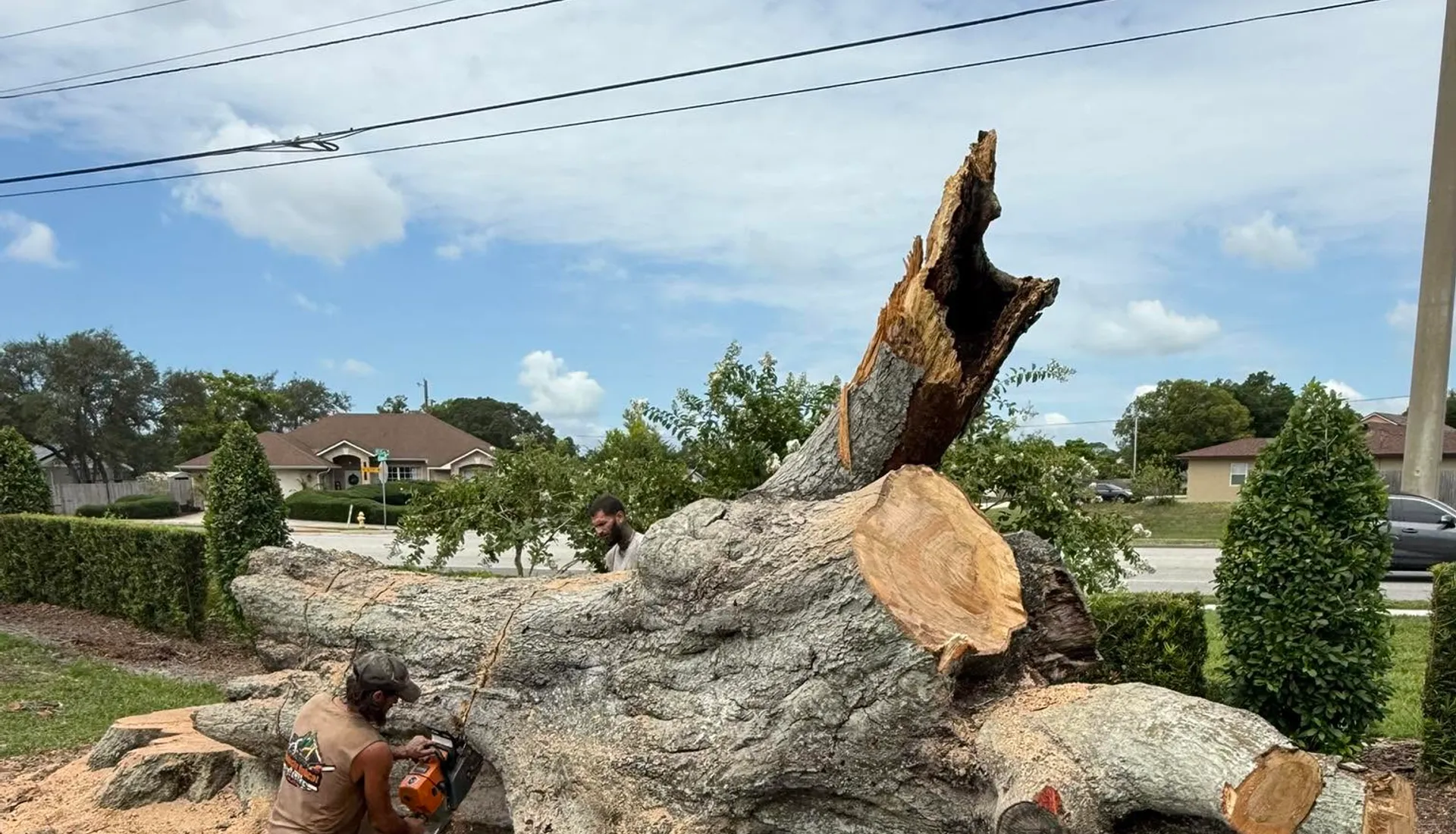
I remember a call after a bad storm a few years ago. A large live oak had come down across a family's front porch. The roof was caved in, and the tree was still under tension. The homeowner had tried to cut some of the smaller branches with a chainsaw, but the main trunk was pinning the porch roof. When our crew arrived, we set up rigging to relieve the pressure on the trunk, then cut it in sections. The whole job took about four hours, but it could have gone very wrong if we hadn't understood the load dynamics. That's the kind of situation where professional tree removal isn't a luxury. It's a necessity.
Regulations and Permits
DeLand has city ordinances that govern tree removal. You can't just cut down a tree on your property because you don't like it. Some trees are protected, especially oaks and other native species. Others require a permit, particularly if the tree is above a certain diameter or if it's in a designated conservation area. A reputable tree service will know the local rules and can help you navigate the permit process. They'll also handle utility line clearance if the tree is near power lines, which is a separate set of regulations and often requires coordination with the utility company.
Ignoring these rules can lead to fines or even legal action. More importantly, it can damage the landscape that makes your property valuable. Good arborists think about landscape preservation. They want to remove the hazard without destroying the soil, the roots of nearby trees, or the overall look of your yard. Lot clearing for a new construction project is a different animal. That's about removing all vegetation from a site, and it requires heavy equipment and careful planning to avoid erosion and runoff issues.
What to Look For in a Tree Service
If you need tree work, don't just pick the first number from an online search. Look for a company that employs certified arborists. Ask if they follow International Society of Arboriculture standards. Ask if they carry insurance and if their crew has OSHA training. A good company will give you an arborist report that outlines the work needed, the methods they'll use, and the timeline. They'll also give you a clear price before they start, not a vague estimate that changes once the saws are running.
Professional tree removal is about more than just cutting wood. It's about safety, regulations, and respect for the property. It's about knowing when to use a bucket truck versus a crane, when to use a stump grinder versus leaving the stump for wildlife, and when to prune and cable instead of remove. A skilled crew brings judgment, experience, and the right tools for each unique situation. That's what you're paying for, and that's what keeps your home and your family safe.
Corrections
Spot something wrong? Send it to the desk and it gets fixed in the open.